The Executive Uniform: How the Most Polished Professionals Dress on Autopilot

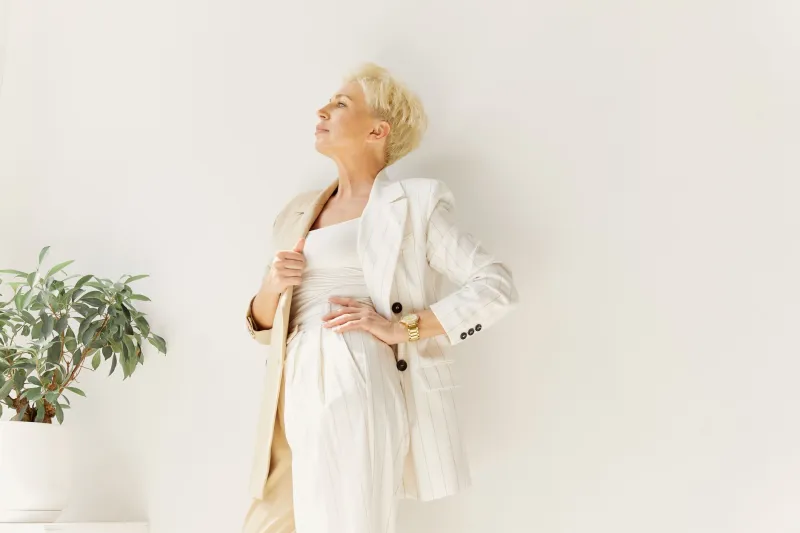
There is a particular kind of confidence that belongs to the person who walks into a Monday morning meeting looking entirely composed — not because they spent an hour in front of their closet, but because they spent almost no time there at all. This is the quiet advantage of the luxury uniform: a deliberately curated weekday rotation that removes the noise of daily dressing while preserving every ounce of elegance.
It is a philosophy that has quietly governed the wardrobes of some of the most recognized figures in business and culture. The late Steve Jobs and his black turtleneck. Barack Obama's deliberately limited palette of suits. Anna Wintour's signature silhouette, repeated season after season with near-mathematical precision. These are not accidents of personal style — they are strategic decisions made by individuals who understand that cognitive bandwidth is finite, and that spending it on clothing each morning is a luxury they cannot afford.
For the discerning professional, the luxury uniform is not a compromise. It is an elevation.
Understanding Decision Fatigue — and Why Your Closet Might Be Costing You
Research in behavioral psychology has long established that the quality of human decisions deteriorates as the number of decisions made in a day increases. This phenomenon — commonly referred to as decision fatigue — affects everyone, regardless of intelligence or discipline. The executive who negotiates multimillion-dollar contracts is just as susceptible as anyone else.
Your morning wardrobe ritual, seemingly inconsequential, draws from the same well of mental energy you will need later. When that ritual is characterized by uncertainty — Does this work? Is this appropriate? What does this say about me today? — it arrives as a quiet tax on the hours that follow.
The luxury uniform eliminates that tax entirely. It does not simplify your style; it clarifies it. The goal is not fewer choices for their own sake, but rather the deliberate curation of a small collection of exceptional pieces that function together so seamlessly that getting dressed becomes a near-automatic act of elegance.
The Architecture of a Weekday Uniform
Constructing a personal uniform begins not with shopping, but with observation. Spend one week noting which items you reach for instinctively — the blazer you feel most authoritative in, the trousers that require no adjustment throughout a twelve-hour day, the shoe that transitions from a morning presentation to an evening dinner without a second thought. These are your anchors.
From these anchors, a wardrobe architecture begins to emerge. A well-built weekday uniform typically rests on three structural elements:
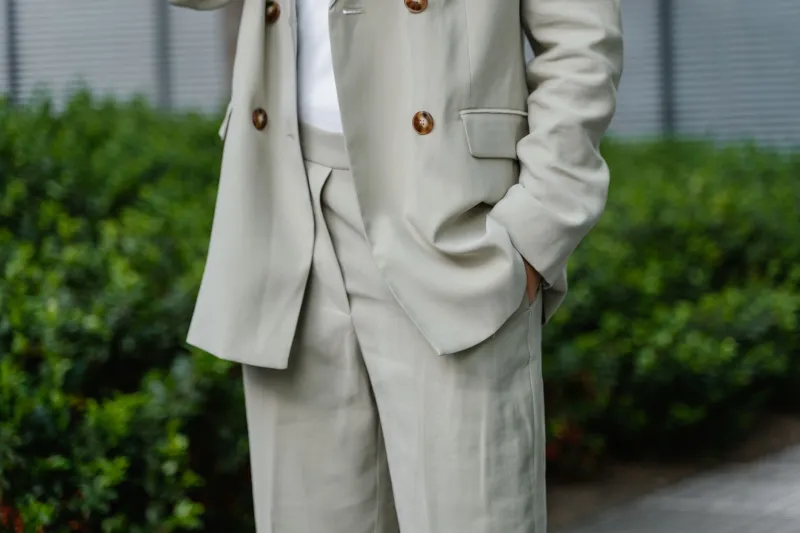
A signature silhouette. This is the shape your body inhabits most naturally and most powerfully. For some, it is a tailored trouser paired with a fluid blouse. For others, it is a column dress that reads equally well in a boardroom and a client lunch. Identify the silhouette that commands the room you most frequently occupy, and commit to it.
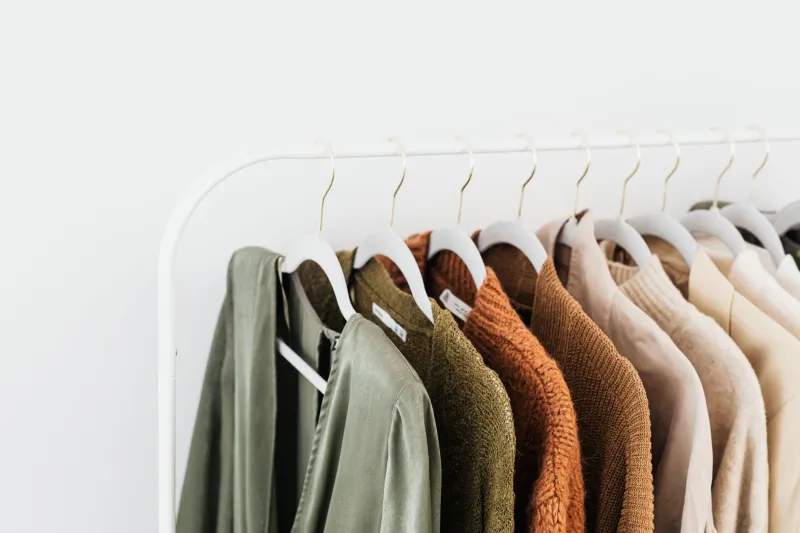
A restrained color palette. The luxury uniform does not rely on visual variety to signal sophistication. Instead, it achieves depth through texture, fabrication, and proportion. A palette of two to four complementary tones — perhaps a warm ivory, a deep navy, and a precise shade of camel — allows every piece to function with every other, creating a wardrobe that is endlessly combinable without ever appearing repetitive.
A material standard. Perhaps the most distinguishing feature of the true luxury uniform is the quality of its components. When you wear the same silhouette repeatedly, the fabrication becomes the story. A silk blouse in the same cut as a polyester one tells an entirely different narrative. Invest in materials — fine wool, supple leather, silk, cashmere — that reward close inspection and age with integrity.
Identifying Your Uniform Pieces: A Practical Framework
The selection of uniform pieces demands the same rigor one might apply to any considered investment. Before committing to a garment as a wardrobe anchor, it is worth asking several pointed questions.
Does it fit without alteration, or with minimal tailoring? A uniform piece must be ready to wear without negotiation. If a garment requires extensive adjustment each time you reach for it — in fit, in styling, in layering — it will never become automatic.
Does it hold its shape over time? Uniform dressing places greater wear on individual pieces. Fabrics that pill, stretch, or lose their structure after a handful of wears will not serve you. Examine construction: stitching density, lining integrity, the weight of the cloth itself.
Does it exist at the intersection of professional and personal? The most enduring uniform pieces are those that feel authentically yours while remaining appropriate across the contexts your professional life demands. A blazer that feels like armor — that you reach for instinctively on days when the stakes are highest — is a uniform piece. One you wear only because it seems expected is not.
The Myth of Monotony
A frequent objection to the concept of the weekday uniform is the fear of appearing repetitive or, worse, uninspired. This concern, while understandable, misunderstands how dressing is perceived by others.
Research consistently suggests that people notice changes in your appearance far less than you imagine. What they register, and remember, is the impression you make — the quality of your presence, the coherence of your aesthetic, the ease with which you carry yourself. A person who wears the same beautifully tailored trousers in a rotation of three pairs, each in a slightly different fabric or shade, will be remembered as impeccably dressed. The specifics will blur; the overall effect will not.
Furthermore, the luxury uniform creates a kind of personal brand. Over time, consistency in dress becomes a form of visual signature — the kind that communicates authority, intentionality, and taste without a word spoken. In professional environments where first impressions are made in seconds, that signature carries considerable value.
Building Toward the Uniform: A Starting Point
For those beginning this process, the most practical entry point is not a complete wardrobe overhaul. Begin instead with a single week's worth of outfits — five complete looks, pre-assembled, that you would feel entirely confident wearing on five consecutive workdays. Hang them together. Note how you feel reaching for them in the morning compared to your standard routine.
From there, identify what each look has in common. The pattern that emerges — in silhouette, color, or fabrication — is the beginning of your uniform vocabulary.
Invest in multiples of your anchor pieces. If a particular trouser fits impeccably and photographs beautifully, own it in two fabrications. If a specific blazer has become the garment you reach for most reliably, acquire it in a second colorway. The luxury uniform is not about wearing the same garment daily; it is about wearing the same standard daily.
The Deeper Return on Investment
At Aadhya Boutique, the philosophy underlying every curated selection is that true luxury is not measured in novelty but in enduring quality — in the confidence that comes from knowing every piece in your possession was chosen with care and will serve you faithfully. The luxury uniform is perhaps the purest expression of that philosophy.
When getting dressed requires no decisions, mornings become quieter. When every garment in your rotation meets the same standard of excellence, confidence becomes less effortful. And when your aesthetic is so precisely defined that others recognize it as distinctly yours, style becomes something you inhabit rather than something you perform.
That, ultimately, is the return on investing in a weekday uniform: not just time saved, but a more refined, more assured version of yourself — present and fully composed before the day has properly begun.