The Anatomy of a Luxury Price Tag: What Your Investment in Fine Fashion Actually Buys
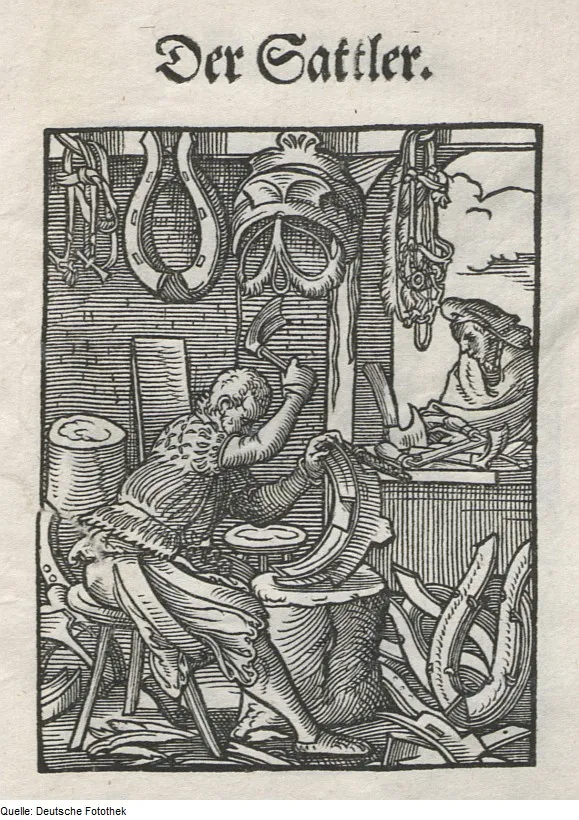
Photo: Unknown, Public domain, via Wikimedia Commons
Let us be direct about something the fashion industry often obscures: a high price does not automatically confer luxury, and a modest price does not automatically signal inferior quality. The relationship between cost and value in fashion is far more nuanced than either number suggests. What separates a meaningful luxury investment from an overpriced disappointment is an understanding of what, precisely, you are paying for—and whether those components align with your values as a consumer.
This is a question worth asking seriously. Americans spend billions of dollars annually on apparel, yet relatively few shoppers understand the structural economics that determine why one dress costs $95 and another costs $950. The gap is not always explained by brand prestige alone. Often, it reflects a fundamentally different set of choices made at every stage of production.
The True Cost of Responsible Production
One of the most significant—and least visible—contributors to luxury pricing is ethical labor. Garments produced in ateliers and workshops that pay fair wages, maintain safe working conditions, and comply with rigorous labor standards carry those costs forward into the retail price. This is not a premium for its own sake; it is the actual cost of production when human dignity is factored into the equation.
By contrast, the artificially low prices that characterize fast fashion are almost always subsidized by labor exploitation somewhere in the supply chain. When a blouse retails for $12, the economics of fabric, transportation, retail overhead, and profit margin leave almost nothing for the people who made it. Understanding this reality does not obligate every consumer to purchase exclusively at the luxury tier—but it does reframe the conversation about what "expensive" actually means.
A garment produced under ethical conditions, in a facility that compensates its workers fairly and operates transparently, is not overpriced. It is accurately priced.
Artisanal Technique: The Hours That Don't Show
Many luxury garments incorporate construction techniques that are genuinely invisible to the untrained eye—and that is precisely the point. Hand-finished buttonholes, hand-rolled hems on silk, basting stitches used to shape a jacket's canvas interlining, and hand-sewn lining attachments are all techniques that contribute nothing obvious to the garment's appearance at first glance. Their contribution becomes apparent only over time, as the piece ages with grace rather than deteriorating under the pressures of regular wear.
These techniques are slow. They require skilled hands, trained over years of practice, working at a pace that cannot be replicated by machinery without sacrificing the result. When a luxury house describes a garment as requiring forty hours of atelier work, that figure is not marketing language—it is a production reality that must be reflected in the price.
For the American consumer accustomed to the speed and volume of mass retail, this can feel abstract. But consider the analogy of a bespoke piece of furniture from a master craftsman versus a flat-pack alternative. The difference in price is legible because the difference in construction is visible. In fashion, the same principle applies, even when the evidence requires closer examination.
Heritage as a Tangible Asset
Brand heritage is often dismissed as intangible—a story told to justify a premium. In reality, heritage functions as a form of institutional knowledge that has direct implications for quality. A house that has been refining the same tailoring techniques for seventy years has access to pattern archives, technical expertise, and accumulated craftsmanship that a newer label simply cannot replicate, regardless of investment.
This is not nostalgia. It is expertise with a documented track record. When a heritage brand produces a trench coat using a construction method developed and refined over decades, the consumer benefits from every iteration that came before. The mistakes have already been made and corrected. The proportions have been tested across thousands of bodies and seasons. The result is a garment informed by a depth of experience that has genuine value.
At Aadhya Boutique, our curation deliberately includes brands whose histories inform their present output—labels whose longevity is itself a form of quality assurance.
Fabric Sourcing and the Premium of Origin
The materials that constitute a luxury garment are frequently sourced through relationships and processes that are themselves expensive to maintain. Cashmere from specific Mongolian herds, silk from established Japanese mills, wool from heritage Scottish weavers—these are not simply raw materials. They are the products of agricultural traditions, regional expertise, and supply chain relationships that take years to develop and require ongoing investment to preserve.
Certified organic cotton, for instance, costs significantly more to produce than conventionally grown alternatives, due to stricter land management requirements and lower yields. Similarly, deadstock fabrics—those sourced from the surplus inventories of luxury mills—carry a premium that reflects both their quality and their limited availability. When a brand invests in superior raw materials, that investment is necessarily passed to the consumer. The resulting garment, however, performs and ages differently than one constructed from commodity-grade inputs.
Scarcity, Exclusivity, and the Economics of Limited Production
Luxury, by definition, is not mass-produced. Limited production runs create genuine scarcity, and that scarcity has economic consequences. When a brand produces 200 units of a particular style rather than 20,000, the fixed costs of design, sampling, and production infrastructure are distributed across far fewer garments. The per-unit cost rises accordingly.
This scarcity also serves a function beyond economics. It ensures that what you wear is not what everyone else is wearing. In a cultural moment defined by the algorithmic homogenization of personal style, genuine exclusivity carries its own form of value—one that is difficult to quantify but immediately felt.
Making Peace with the Investment
None of this is to suggest that luxury fashion is accessible to all budgets, or that it should be. The point is not to advocate for spending more—it is to advocate for spending with greater awareness. When you understand that a $600 dress reflects ethical wages, artisanal construction, premium materials, and limited production, the price becomes legible in a way that a $600 impulse buy never quite is.
The most sophisticated luxury consumers are not those who spend the most. They are those who understand exactly what they are purchasing and why it matters to them. That understanding—cultivated deliberately, over time—is the foundation of a wardrobe that holds its meaning long after the receipt has been forgotten.