The Inner Edit: Trusting Your Instinct When the Trend Cycle Gets Loud
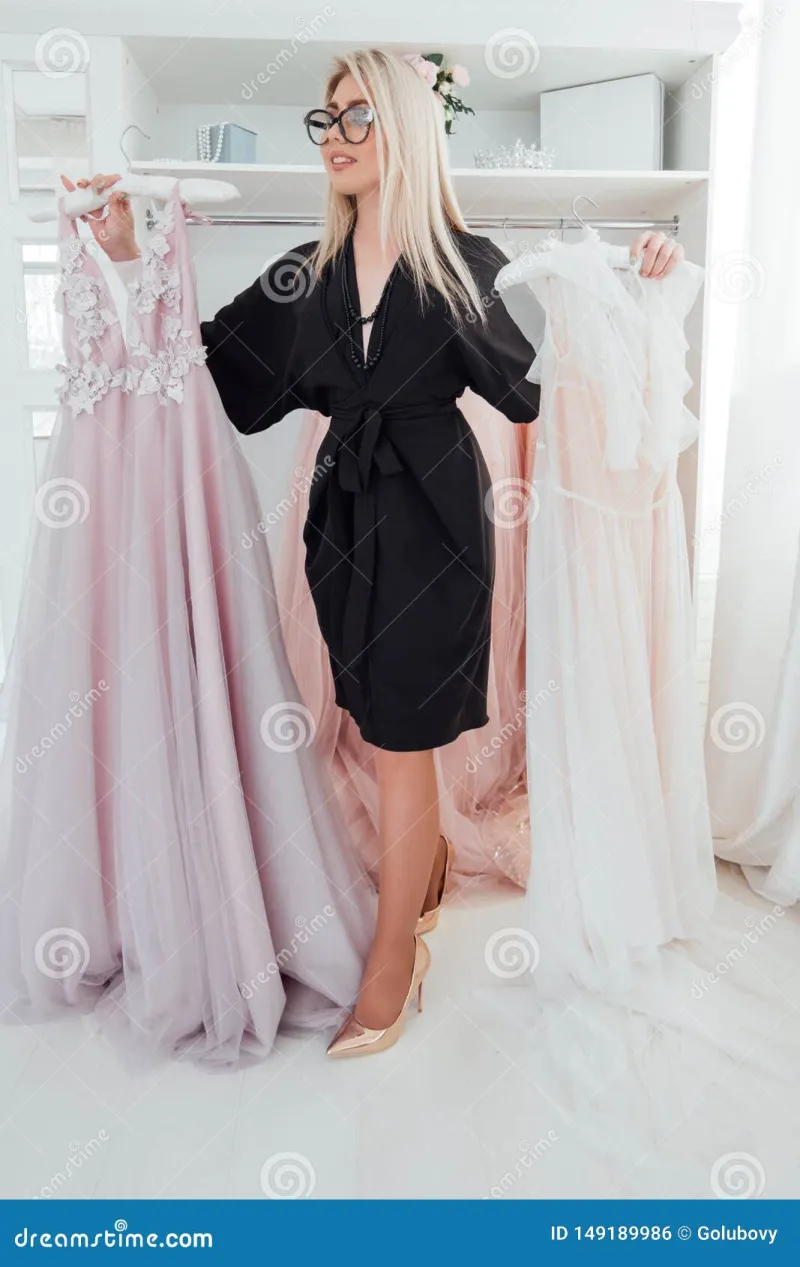
Photo: elegant woman contemplating luxury fashion wardrobe boutique, via thumbs.dreamstime.com
There is a particular kind of exhaustion that sets in when you have been following fashion long enough. The cycle accelerates. Micro-trends appear on Monday, peak by Thursday, and feel dated before the weekend. What was declared essential in September becomes the subject of quiet ridicule by March. And yet, somewhere beneath the relentless churn, a quieter voice persists — the one that has always known, instinctively, what belongs in your wardrobe and what does not.
Learning to hear that voice, and more importantly, to trust it, is perhaps the most valuable skill a luxury shopper can develop.
The Architecture of a Trend
Not all trends are created equal. Some emerge from the design studios of heritage houses and carry within them a genuine shift in cultural sensibility — a new proportion, a rediscovered fabric, a silhouette that suddenly feels inevitable. Others are manufactured moments: algorithmically amplified, retailer-driven, or built on the scaffolding of celebrity endorsement. The distinction matters enormously when you are making considered investments rather than impulse purchases.
The experienced eye learns to ask a foundational question before any transaction: Where did this come from? A trend rooted in craft, in historical reference, or in the evolution of a designer's established vocabulary tends to have staying power. A trend born from a viral moment or a single runway spectacle often burns bright and disappears just as quickly. Understanding the genealogy of a fashion movement is the first step toward evaluating its longevity.
What FOMO Actually Costs You
Fear of missing out is the luxury market's most effective psychological lever. Limited editions, capsule releases, and countdown timers are all engineered to compress your decision-making window. When time pressure is introduced, the rational, curatorial mind retreats, and the reactive, emotional self steps forward.
The cost of FOMO-driven purchasing is rarely visible on the receipt. It shows up later — in the coat that never quite integrates with anything else you own, in the statement bag that felt urgent in the moment and now sits unworn at the back of your shelf. These are not simply financial losses. They are disruptions to the coherence of a wardrobe you have spent years building with intention.
True luxury shopping is, at its core, an act of resistance. It resists urgency. It resists the pressure to participate simply because everyone else appears to be doing so. The most elegantly dressed women and men in any American city are rarely the ones who caught every trend. They are the ones who caught the right ones — and had the discipline to let the rest pass.
Building the Instinct: A Practiced Skill, Not a Natural Gift
Intuition in fashion is frequently mischaracterized as innate — something one either possesses or does not. In reality, editorial instinct is cultivated through deliberate exposure and honest self-reflection.
Begin with your own wardrobe history. Which purchases have you worn repeatedly, across seasons and occasions, without ever questioning their place in your closet? Which have you reached for once, photographed, and quietly retired? The pattern that emerges is not random. It reveals the specific vocabulary of your aesthetic — the colors, constructions, and proportions that genuinely resonate with how you move through the world.
Once that vocabulary is clear, evaluating any new trend becomes considerably more straightforward. The question is no longer Is this desirable? but rather Is this mine? The former invites comparison and external validation. The latter is an act of self-knowledge.
The Useful Tension Between Trend and Timelessness
It would be a mistake, however, to dismiss trends entirely. The most sophisticated wardrobes are not static archives. They breathe. They absorb, selectively, the energy of the present moment while remaining anchored in a personal aesthetic that transcends any single season.
The skill lies in identifying which trends serve as natural extensions of what you already own and wear with confidence. A woman whose wardrobe is built around clean tailoring and restrained color might find genuine value in a season that celebrates sculptural suiting — not because the trend commands her attention, but because it speaks directly to what she already understands about herself. Conversely, that same woman might find a maximalist print moment entirely irrelevant, regardless of how persuasively it is presented.
This is the editorial vision in action: not a rigid refusal to engage with fashion's present tense, but a discerning filter that asks every new piece to justify its place within a larger, coherent whole.
Practical Strategies for the Considered Buyer
Several habits, practiced consistently, can sharpen this instinct considerably.
Introduce a waiting period. Before committing to any trend-driven purchase, allow a minimum of two to three weeks to pass. If the desire remains — if you find yourself returning to the piece in your mind, imagining it within the context of your existing wardrobe — that persistence is meaningful. If the urgency dissipates, you have your answer.
Consult your existing wardrobe before any new acquisition. Physically identify three to five pieces the prospective purchase would work alongside. If that exercise proves difficult, the item may be a standalone statement rather than a genuine addition to your curated collection.
Study the secondary market. Resale platforms offer a remarkably honest view of what actually endures. Pieces that retain or appreciate in value are not always the most loudly promoted at the time of release. Observing which items from previous seasons command sustained demand is an education in what the market — and by extension, real wearers — has found genuinely lasting.
Distinguish between admiration and desire. Many beautiful things are worth admiring without owning. The ability to appreciate a trend from a respectful distance — to acknowledge its artistry without feeling compelled to possess it — is a mark of a genuinely mature aesthetic sensibility.
The Quiet Confidence of the Edited Eye
There is a recognizable quality to the person who has developed this kind of instinct. They do not appear to be chasing anything. Their wardrobe does not announce itself as a collection of current moments; it presents, instead, as a considered point of view — one that happens to be timely without being time-bound.
This is the aspiration at the heart of truly curated dressing: not to be ahead of the trend, nor to ignore it entirely, but to engage with fashion on your own terms. To know, with quiet certainty, which pieces belong to your story and which are simply passing through someone else's.
The trend cycle will always be loud. Your inner edit does not need to compete with it. It only needs to be heard.