Beyond the Mirror: When a Woman's Style Becomes Her Signature
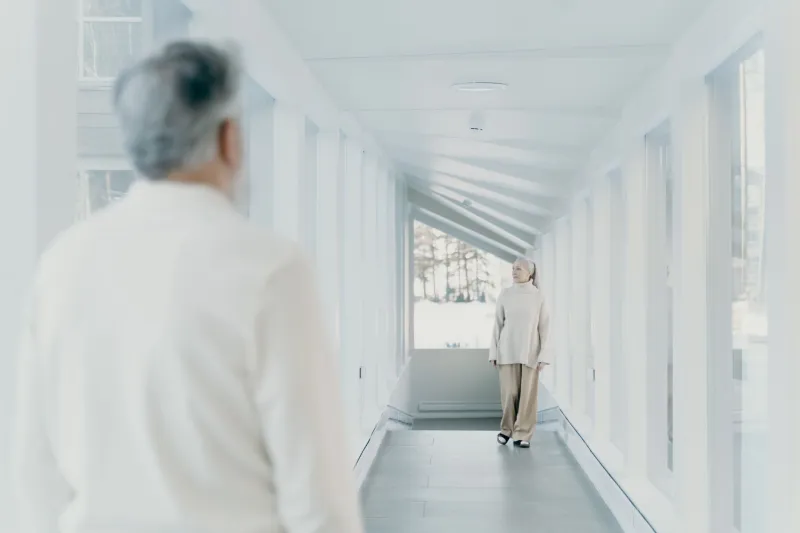
There is a particular kind of ease that settles over a woman once she stops asking her wardrobe to answer questions and starts allowing it to simply confirm what she already knows. This is not the ease of indifference—it is the ease of absolute clarity. It is, perhaps, the most quietly powerful thing a woman can wear.
For many, getting dressed is still a negotiation. A conversation between the woman standing at the closet and the world she is about to enter. Will this read as authoritative? Is this appropriate for the room? Does this say what I mean to say? These are not trivial concerns. They are, in fact, the very questions that eventually lead a woman toward something far more valuable than a well-stocked wardrobe: a fully realized aesthetic identity.
But the goal—if there is one—is to render those questions unnecessary.
The Moment Anxiety Becomes Architecture
Every woman who has arrived at true personal style remembers a specific turning point, even if she cannot name the date. It is the moment when the act of choosing an outfit stops feeling like a test and begins to feel like recognition. Not what should I wear but this is what I wear. The distinction sounds subtle. The lived experience is anything but.
Psychologists who study decision fatigue have long noted that the sheer volume of daily choices erodes cognitive clarity over time. What is less frequently discussed is how a refined personal aesthetic functions as a form of cognitive architecture—a structure that eliminates an entire category of decisions before the day even begins. This is not laziness. It is precision. And in the lives of high-achieving women, precision is currency.
The women who have mastered this understand something that the fashion industry often obscures: style is not about variety. It is about velocity. The ability to move through the world without friction, without hesitation, without the low-grade anxiety of wondering whether you are presenting yourself correctly. When your aesthetic is fully formed, that friction simply disappears.
The Difference Between a Uniform and a Formula
There is a common misconception that developing a signature style means wearing the same thing on a loop. It does not. What it means is that every piece in your wardrobe belongs to the same coherent visual language—and that language is yours alone.
A formula is external. It is borrowed from a style guide, a Pinterest board, a well-meaning editor who has decided that every woman needs a white button-down and a pair of straight-leg trousers. A formula is applied. A signature is inhabited.
The women who carry themselves with the most effortless authority are not following a formula. They have internalized a set of aesthetic principles so thoroughly that those principles now operate below the level of conscious thought. They know instinctively which silhouettes honor their proportions. They know which fabrics move the way they want to move through a room. They know which colors align with the version of themselves they carry into every meeting, every dinner, every quiet Tuesday morning when no one is watching but themselves.
This is the luxury uniform effect in its truest form—not a capsule wardrobe prescribed by someone else, but a visual identity so authentically one's own that it requires no maintenance, no second-guessing, and no external validation to sustain it.
What Investment Dressing Actually Buys
There is a reason that the most discerning shoppers at the highest end of the market are not chasing trends. They are not refreshing their wardrobes seasonally in pursuit of novelty. They are curating with an almost architectural intentionality—adding only what deepens and extends the visual language they have already built.
When a woman invests in a beautifully constructed cashmere coat in a silhouette she has worn for fifteen years, she is not buying warmth. She is buying confirmation. She is buying the quiet pleasure of knowing that this piece will look exactly right, because she has spent years learning what exactly right looks like on her body, in her life, for the world she moves through.
This is what separates investment dressing from expensive dressing. Expensive dressing accumulates. Investment dressing compounds. Each considered piece reinforces the coherence of the whole, and that coherence—over time—becomes something that no single garment could achieve on its own: presence.
The Confidence That Cannot Be Purchased, Only Developed
It would be tempting to suggest that the right pieces alone can produce this kind of settled self-assurance. They cannot. The wardrobe is the expression; the clarity comes first.
Developing a personal luxury aesthetic is, at its core, an act of sustained self-knowledge. It requires a woman to ask not what is fashionable but what is true. True to her body. True to her values. True to the life she is actually living rather than the life she imagines she should be performing. This kind of honesty is harder than it sounds in a culture that profits from keeping women in a perpetual state of aesthetic uncertainty.
But the women who do the work—who sit with their wardrobes long enough to understand what is serving them and what is simply filling space—arrive somewhere extraordinary. They arrive at a place where getting dressed becomes, as one might describe a perfectly made espresso or a well-edited room, entirely without excess. Everything present for a reason. Nothing present without one.
The Invisible Luxury
At Aadhya Boutique, the philosophy of curated luxury has always rested on a single conviction: that true elegance is never loud. It does not announce itself. It simply is. And nowhere is this more evident than in the wardrobe of a woman who has stopped trying to dress well and simply knows how.
This is the invisible luxury—the one that cannot be photographed or quantified or sold as a trend. It is the luxury of certainty. Of moving through the world in clothes that feel less like choices and more like extensions of the self. Of standing in front of a closet full of pieces that all speak the same language and understanding, with complete calm, exactly what to say.
The most refined wardrobes, in the end, are not the fullest ones. They are the most honest ones. And the women who build them are not the women who have the most—they are the women who have decided, with great deliberateness, exactly what they need.
That decision, made fully and without apology, is where style ends and identity begins.