When Price Lies: Decoding the True Value Behind a Luxury Label
There is a quiet assumption embedded in the act of luxury shopping: that a higher price is, by definition, a mark of superior quality. It is an assumption the fashion industry has spent decades cultivating — and one that, upon closer examination, does not always hold. The truth is more nuanced, more interesting, and ultimately more useful to know.
For the truly discerning buyer, the question is never simply how much does this cost? The more revealing question is what, precisely, am I paying for? The answer will vary dramatically from one purchase to the next, and learning to read those differences is what separates an impulsive spender from a genuine connoisseur.
The Architecture of a Luxury Price
Luxury pricing is not a single equation. It is a layered structure built from several distinct components, and not all of them correspond to what you can see or feel when you hold a garment in your hands.
At the foundation sits the cost of production: the quality of raw materials, the complexity of construction, the wages paid to skilled artisans, and the time invested in each piece. A hand-stitched cashmere coat from a small Italian mill carries real, traceable costs that justify a premium. The fibers are finer, the construction is more labor-intensive, and the lifespan of the garment is measurably longer. This is the kind of premium that pays dividends.
Above that foundation, however, sits something harder to quantify: brand equity. Heritage houses and iconic labels carry decades — sometimes centuries — of cultural weight. When you purchase from a storied maison, you are not only acquiring a garment; you are acquiring a piece of a narrative. That narrative has genuine value in terms of resale, social recognition, and the psychological satisfaction of ownership. But it also means you are paying, in part, for advertising campaigns, flagship retail spaces on Rodeo Drive or Fifth Avenue, and the maintenance of an image carefully engineered to feel exclusive.
Then there is a third layer: manufactured scarcity and hype. Limited drops, waitlists, and influencer-driven demand can inflate prices far beyond what either production costs or brand heritage would justify. At this level, price becomes almost entirely a social signal — a membership fee to a cultural moment rather than a reflection of what the object actually is.
Heritage as a Value Multiplier
Brand heritage is not mere sentimentality. When a house has spent generations refining a particular technique — a specific way of cutting a jacket, a proprietary weave developed in-house — that accumulated knowledge has real consequences for the finished product. Seek out brands whose heritage is specific rather than vague. A label that can articulate exactly where its fabric is sourced, which atelier produces its pieces, and how long its artisans have been trained is telling you something true. A label that speaks only in the language of lifestyle imagery and celebrity association may be selling you atmosphere.
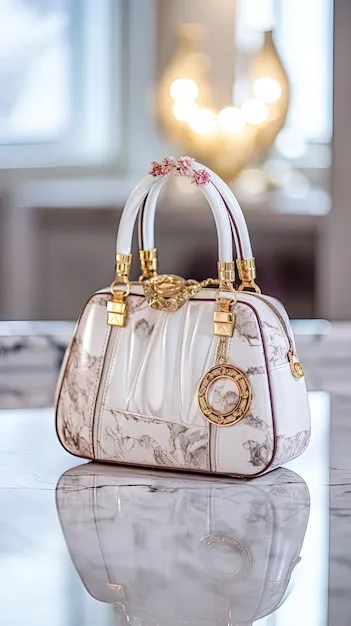
In practical terms, this means doing a modest amount of research before committing to a significant purchase. Country of manufacture, material provenance, and production transparency are all signals worth investigating. Many American shoppers are surprised to discover that two handbags at identical price points can have entirely different production stories — one made in small batches by trained craftspeople, the other assembled at scale with premium branding applied at the end.
The Markers of Genuine Craftsmanship
When evaluating whether a price reflects real quality, the garment itself will often tell you more than the marketing will. There are specific, tactile indicators that experienced buyers learn to read almost instinctively.
Examine the weight and drape of the fabric. Quality materials have a particular hand — a substance and movement that synthetics and lower-grade natural fibers cannot replicate convincingly. Run your fingers along the seams. In well-constructed garments, stitching is even, tension is consistent, and the seam allowance is generous enough to allow for alterations. Look at the lining: in a truly fine coat or blazer, the lining is cut and finished with the same care as the exterior. Buttons are often a telling detail — horn, shell, and high-grade resin have a weight and warmth that plastic substitutes cannot match.
These are not esoteric observations reserved for industry insiders. They are learnable skills, and developing them will fundamentally change how you shop.
When Marketing Outpaces the Product
The contemporary fashion landscape has produced an interesting phenomenon: brands whose cultural cachet has grown faster than their product quality. This is not a cynical observation — it is simply a consequence of how modern luxury marketing operates. Social media has accelerated the pace at which a label can achieve aspirational status, sometimes before the underlying product has matured to match the perception.
The signs are recognizable once you know what to look for. Inconsistent quality across product lines — impeccable in the hero pieces featured in campaigns, noticeably less so in secondary categories — suggests that craftsmanship is not the primary investment. Aggressive logo placement can be another indicator: genuine confidence in product quality rarely requires the garment to announce itself so insistently. And price increases that outpace any discernible improvement in materials or construction are worth noting.
None of this means that aspirational brands lack merit. It means that the discerning buyer calibrates expectations accordingly — purchasing from such a house for the cultural experience it offers, rather than assuming the price reflects unmatched construction.
Resale Value as a Quality Proxy
One of the most useful and underutilized tools for evaluating luxury purchases is the secondary market. Resale platforms have created an unprecedented window into which pieces hold their value over time — and which do not. Broadly speaking, items that retain or appreciate in value tend to be those where quality of construction, material excellence, and genuine scarcity converge. Items whose resale value drops sharply are often those where price was driven primarily by trend or marketing momentum.
Before committing to a significant investment purchase, a brief survey of the resale market for that specific item or category can be genuinely illuminating. It is not about planning to resell — it is about using collective market intelligence as a proxy for enduring quality.
Confidence Without the Premium Fog
The goal of understanding luxury pricing is not cynicism. It is clarity. There are extraordinary pieces in the world — garments and accessories whose price is entirely justified by the artistry, materials, and longevity they represent. There are also beautiful objects whose price reflects something else: heritage myth, marketing investment, or the simple economics of demand. Both can be worth purchasing, provided you understand which you are choosing and why.
The most elegant shoppers are those who move through the market without being dazzled by price alone. They ask questions, handle garments with attention, research production stories, and trust their own developing eye. They know that a four-figure price tag is a starting point for inquiry — not a conclusion.
At Aadhya Boutique, this is the kind of confidence we believe every curated purchase should be built upon: not the reflexive faith that expensive equals superior, but the earned knowledge that allows you to recognize genuine value when it is truly present.